Scientists at Penn State University have discovered that Martian dirt has a weird side effect: it's super toxic to tardigrades. The tiny "water bears" that can survive anything else on Earth just shriveled up and died when exposed to the regolith simulant MGS-1, while those in OUCM-1 faired slightly better.
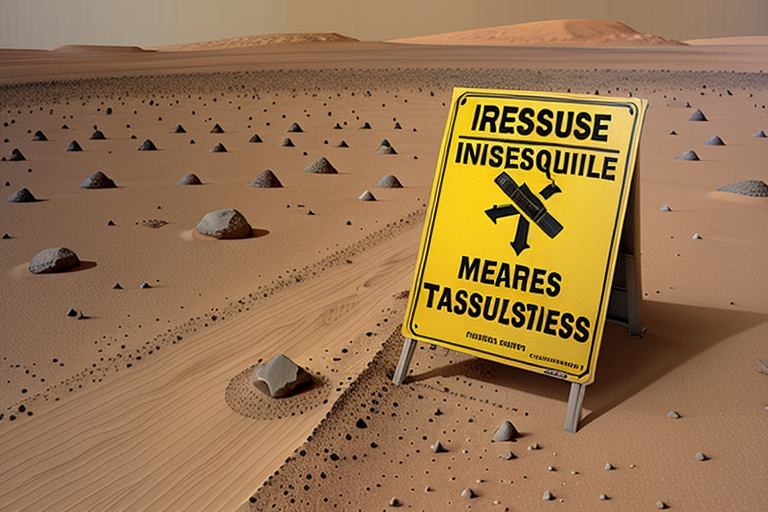
The researchers were trying to figure out if they could use Martian soil to grow plants for future human settlements. But it turns out that the dirt has its own defense mechanism - a built-in "no trespassing" sign that zaps microscopic animals.
"It's like Mars is saying, 'Hey, don't even think about bringing your tiny animal friends here,'" said lead researcher Corien Bakermans in an interview. "But if you just wash it with some water, it's totally fine for planting and eating."
So the next time a future human colonist wants to visit Mars, they'll need to bring their own soap and water to clean off the Martian regolith before setting up shop.
The implications of this research are far-reaching. It means that any future Martian settlements will have to develop specialized cleaning protocols to avoid poisoning themselves on their new home's toxic dirt.
And it also raises questions about the ethics of interplanetary colonization. Should humans be allowed to bring their tiny animal friends to Mars, knowing that they'll just get fried by the planet's built-in defense mechanism?
In related news, NASA has announced plans to establish a new "Planetary Protection Office" to deal with the fallout from this discovery. The office will be headed by a team of experts who specialize in cleaning up after themselves on alien planets.
"This is a major breakthrough," said J. Nick Benardini, microbiologist and head of the Planetary Protection Office. "We can finally start planning our Martian vacations without worrying about getting poisoned by the local dirt."